
Enhancing Performance and Durability in Modern Cooling Systems
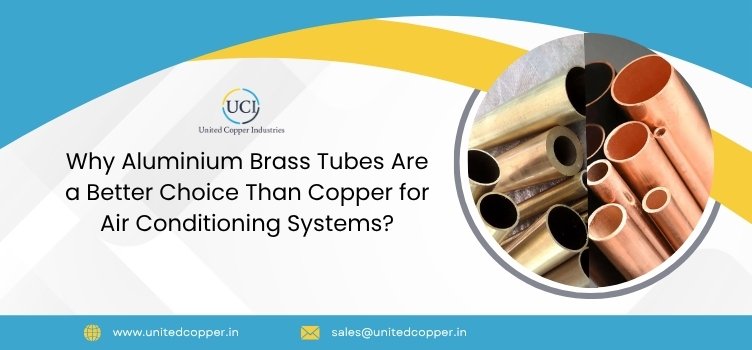
Aluminium Brass Tube for air conditioning have become a preferred alternative to traditional Copper Tubes in many industrial and commercial HVAC applications. Why Aluminium Brass Tube Are a Better Choice Than Copper for Air Conditioning Systems? With the development of cooling systems in accordance with the increased level of efficiency and durability, the material selection is very important. Aluminium Brass Tube are replacing Copper Tubes as they are better corrosion resistant, stronger in mechanical properties, and less expensive than Copper Tubes, which have been the standard in the industry.
The Copper Tubes may also corrode faster in conditions where the air conditioning system is exposed to moisture, saline water or industrial contaminants, which will escalate the maintenance costs and reduce the life cycle of the system. A blend of copper and zinc with traces of aluminium, aluminium brass is less prone to such circumstances. The paper will explain the difference between copper and Aluminium Brass Tube, their advantages, and why aluminium brass is becoming a smart alternative to the current air conditioning and refrigeration systems.
Copper vs Aluminium Brass Tube: Major Differences
Having proper knowledge of material properties is relevant when selecting appropriate tubing to be used in air conditioning systems in challenging applications.
| Property | Copper Tubes | Aluminium Brass Tube |
| Corrosion Resistance | Moderate | Excellent (especially in marine/coastal environments) |
| Strength | Good | Higher mechanical strength |
| Cost | Expensive | More cost-effective |
| Maintenance | Requires frequent maintenance | Low maintenance |
| Lifespan | Moderate | Longer service life |
| Resistance to Biofouling | Low | High |
Advantages of Aluminium Brass Tube for Air Conditioning
1. Superior Corrosion Resistance
This can be explained by the fact that the latter is highly resistant to corrosion, thus the main reason why the refrigeration and the HVAC are equipped with the Aluminium Brass Tube.
- Wet and coastal conditions are good.
- Immunity is known to be polluted by saline and industrial pollutants.
- Creates a protective coating of oxide, which inhibits degradation.
The Copper Tubes, on the other hand, will not struggle to get corroded in case of an unfavourable environment, and the corrosion will result in leakage and eventual breakdown of the system in the long run.
2. Higher Mechanical Strength and Durability
The Copper Tubes are not very strong mechanically, either, like the aluminium brass tubes.
- Low level of erosion and wear resistance.
- The high-pressure and high-speed systems might be carried out with many.
- There are minimised risks of tube deformation.
This renders them very useful in the massive air conditioning systems that are applied in industrial plants and corporate structures.
3. Cost-Effective Alternative
Copper, on the other hand, is quite expensive, as well as the fact that it has also been reported to be a good thermal conductor.
- Aluminium Brass Tube provide a balance between performance and cost
- Lower lifecycle costs due to reduced maintenance
- Longer replacement intervals
This will translate to improved ROI in the long term for the procurement experts and the plant managers.
4. Improved Resistance to Biofouling
Microorganisms, algae and bacteria are capable of biofouling and decreasing the efficiency of the system.
- Aluminium brass has natural resistance to microbial growth
- Maintains cleaner internal surfaces
- Enhances heat transfer efficiency over time
Copper Tubes, on the contrary, are easier to foul and would consume more energy and maintenance.
5. Suitable for Harsh Operating Conditions
Air conditioning tubes may be subjected to severe conditions in industrial and marine settings.
- Aluminium brass performs well in contaminated water systems
- Resistant to scaling and deposits
- Maintains structural integrity under thermal stress
This is besides the fact that aluminium brass is a permanent alternative in the HVAC systems of power plants, offshore platforms and chemical industries.
Applications of Aluminium Brass Tube in Air Conditioning
Aluminium brass is used as air conditioning tubes in:
- Heat exchangers
- Marine HVAC systems
- Industrial cooling systems
They are able to endure adverse conditions and still be operational, and hence they are applicable for long-term applications.
Conclusion
The choice of the proper material that should be applied in the air conditioning system is quite significant in consideration of its efficiency, durability and cost-effectiveness. Even though Copper Tubes have dominated the market, Aluminium Brass Tube are a worthy competitor that is more resistant to corrosion, stronger, and requires less maintenance. The replacement of copper with Aluminium Brass Tube is not just a trend, but a strategic upgrade in the case of industries that are operating in harsh conditions.
The long life of the systems, enhanced output, and reduction of operating costs can be enjoyed by engineers and procurement teams that invest in aluminium brass, and it can be a good alternative to explore in the modern HVAC and refrigeration systems.
FAQs
1. How come that instead of Copper Tubes we use Aluminium Brass Tube?
They are less susceptible to corrosion, scaling and seawater corrosion and are therefore more dependable under undesirable conditions in the HVAC setups compared to copper.
2. What about Aluminium Brass Tube? Can they be used with refrigeration?
Yes, they are stable in heat transfer, in resisting fouling and efficient in continuous operation in refrigeration.
3. Do Aluminium Brass Tube cost less compared to Copper Tubes?
Yes, they cut the cost in the long term because they have lower maintenance and an increase in the time of service as compared to copper.
Need Aluminium Brass Tube for air conditioning? Get professional solutions and the most advantageous prices. Contact us or email us at sales@unitedcopper.in today.