
Why Material Selection Matters in Modern Plumbing and Mechanical Systems?
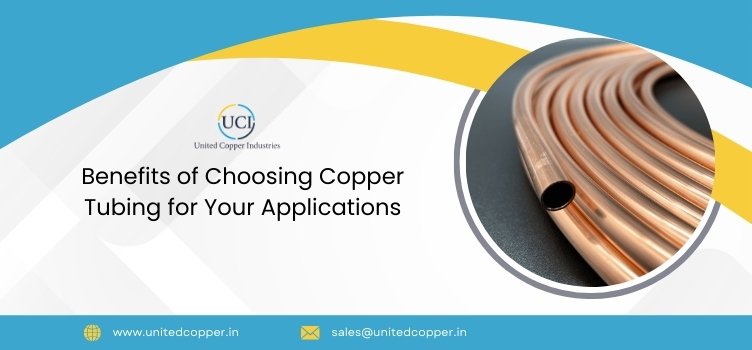
The choice of appropriate material to be used in plumbing, HVAC, and building infrastructure is among the most critical ones that the leaders of construction, architects, and contractors need to make. Durability, efficiency and long-term performance directly affect the costs of the project and the reliability of the building. Among the wide range of materials currently present on the market, one of the most useful ones is the Benefits of Choosing Copper Tubing, since copper has had its benefits for decades, both in individual and large-scale commercial projects.
Copper has been known to be resistant to corrosion, strong and has high thermal conductivity. These features qualify it to be a perfect material for water supply systems, heating systems, and cooling infrastructure. From high-rise buildings to industries, copper tubing remains one of the most preferred materials since it offers reliability in harsh environments. In determining the materials to use in plumbing or mechanical installations, the Benefits of Choosing Copper Tubing assists the decision-maker to identify solutions that enhance efficiency, minimize maintenance, and improve the longevity of important systems.
Why Choose Copper Tubing for Plumbing Systems?
Residential, commercial and industrial buildings’ plumbing infrastructure has been one of the most widespread uses of copper tubing. Plumbing with copper has been in use for decades because it is reliable and can guarantee the quality of water.
In the question of why choose copper tubing for plumbing, it has several benefits over many other options.
Key benefits include:
- Corrosion resistance – Copper pipes withstand rust and deterioration, which means that they have a longer service life than many other materials.
- Good durability – Copper pipes are able to tolerate high pressure and temperatures.
- Low maintenance – When copper plumbing systems are well fitted, they need little maintenance.
Food safe – Copper is naturally antimicrobial, which is beneficial in keeping the water in the plumbing system of a building.
Due to these strengths, copper plumbing pipes are still a reliable solution for contractors who are undertaking large-scale housing or trade infrastructure.
Copper Tubing for HVAC Systems
Heating and cooling systems are also another important sector where copper has been found to excel. Engineers and building experts well acknowledge the benefits of copper tubing in HVAC systems.
Copper tubing is also significant in heat transfer that is critical in efficient HVAC operations. The thermal conductivity of the material enables systems to work more efficiently and also use less energy.
Important advantages include:
- Good heat transfer performance.
- High-pressure refrigerant system performance.
- Fit with the current HVAC systems.
- Critical environments’ performance over the long term.
Due to these characteristics, copper HVAC piping is widely employed in commercial buildings, office towers, hospitals and industrial plants.
Copper Tubing for Air Conditioning Systems
Refrigerants require effective piping to move up and down the cooling systems. That is why it has turned out to be the standard in the industry of copper tubing for air conditioning systems.
The copper tubing facilitates the functionality of the air conditioning systems since it serves to promote structural integrity and enhance the heat exchange.
Major benefits include:
- Good thermal conductivity, which enhances cooling ability.
- Opposition to internal corrosion by refrigerants.
- Flexibility for easy installation and routing.
- Long operational lifespan.
These are some of the merits that make copper tubing one of the most trusted materials in the current cooling infrastructure.
Versatile Copper Tubing Applications Across Industries
In addition to plumbing and HVAC systems, copper tubing is used in several industries because of the peculiarities of the physical and chemical characteristics of copper.
Common applications include:
- Fire sprinkler systems.
- Delivery systems of medical gases.
- Fluid transportation in the industry.
- Solar heating systems.
- Refrigeration equipment.
Since it can be used under pressure, changes in temperature and corrosive conditions, copper tubing is a very convenient material in a wide range of engineering applications.
Long-Term Economic Benefits of Choosing Copper Tubing
Although initial material costs play a significant role, the long-term cost of infrastructure systems is an aspect that experienced contractors and architects consider. The Benefits of Choosing Copper Tubing will be even more important in this regard.
Long-term advantages include:
- Reduced maintenance costs.
- Reduced chances of leakage and system malfunction.
- Improved system efficiency.
- Long service life as opposed to most of its alternatives.
In the case of large construction works, these advantages are converted to lower operational costs and enhanced reliability for building owners.
Conclusion
To sum up, the Advantages of Copper Tubes are not limited to the simplest plumbing solutions. Copper tubing is considered the best in durability, resistance to corrosion and thermal efficiency, thus it can be considered as a reliable option in construction projects today. Since copper is used in plumbing as well as copper tubing in HVAC and copper tubing in air conditioning, the material remains an important aspect of the infrastructure of the building. Knowing all the various applications of copper tubing, construction leaders, architects, and contractors will be able to make special decisions that enhance the effectiveness, dependability, and sustainability of their systems.
FAQs
Q1. Why choose copper tubing for plumbing systems in modern buildings?
Copper tubing has been used in preference in plumbing due to its longevity, corrosion resistance, and safe delivery of water. It has high durability and low maintenance needs, rendering it a dependable solution to both residential and commercial plumbing systems.
Q2. What are the benefits of copper tubing in HVAC systems?
HVAC is also more efficient with copper tubing, as it has high-pressure and heat transfer properties. These characteristics make the heating and cooling systems work more efficiently and last longer.
Q3. Is copper tubing suitable for air conditioning installations?
Yes. Air conditioning copper tubing is essentially applied due to its ability to deal with refrigerants, avoid corrosion and facilitate effective heat exchange and therefore is applicable in modern cooling.
Looking to improve system performance with reliable materials? Explore the Benefits of Choosing Copper Tubing for your next infrastructure project. Connect with our experts today to find high-quality copper tubing solutions tailored to your construction and industrial requirements. Contact us or email us at sales@unitedcopper.in to get started.