
How Copper Piping Enables Efficient Cooling and Heat Transfer?
In contemporary HVAC systems, knowledge of What Are the Two Copper Lines on an Air Conditioner are is a must for those involved in building design, construction planning, or large project implementation. These are not any random pipes of copper; they form the backbone of the air conditioning system, as they transfer refrigerant between the indoor and outdoor units. It is impossible to cool without them.
The construction heads, architects, and contractors’ understanding of the operation of these copper lines assists in ensuring proper layouts of installations, space planning, and efficiency over the long term of these systems. Poorly laid or dimensioned, these lines may have a direct effect on energy, cooling, and maintenance costs. That is why the issue of what the two copper lines on an air conditioner are is not only technical, literally speaking, but also a practical area to take into consideration in the field of residential, commercial, and high-rise buildings.
Understanding the Two Copper Pipes in an Air Conditioner System
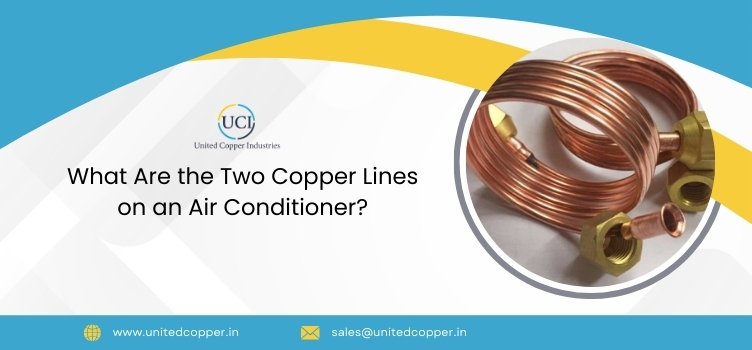
To fully describe what the two copper lines on an air conditioner are, one would need to know that each split/ducted AC system employs two different copper pipes, each with a specific part to play in the refrigeration process.
These two copper lines are:
- The suction line (gas line)
- The liquid line
The combination of them creates a closed loop, which enables absorption of heat inside and dissipation outside.
Suction Line (Gas Line) – The Copper Pipe of Bigger Size.
The thicker of the two copper pipes is normally the suction line. Among the most significant aspects in describing the meaning of the two copper lines on an air conditioner is that the line contains low-pressure refrigerant gas, which is carried by the compressor to the outside of the compressor.
Key characteristics of the suction line:
- Higher diameter than the liquid line.
- Insulated to avoid the gain of heat.
- Refrigerant gas, which is carried.
This copper line must be well-insulated in construction works. The lack of insulation may result in energy wastage, low cooling performance, and condensation within walls or ceilings.
Liquid Line – The Smaller Copper Pipe
The liquid line is the second part of What Are the Two Copper Lines on an Air Conditioner. This is a smaller pipe that transfers the high-pressure liquid refrigerant between the outdoor and indoor units.
Important features of the liquid line include:
- Less large diameter copper tubing.
- Normally not insulated or loosely insulated.
- Carries hot refrigerant at high pressure.
To architects and contractors, the proper installation of the liquid line routing is significant so as to eliminate the sharp bends or excessive length that may minimize the efficiency of the system.
Why Copper Is Used for AC Refrigerant Lines?
The most popular follow-up to what the two copper lines on an air conditioner are is what makes copper better than other metals. Copper has a special set of features that is ideal in HVAC systems.
Advantages of copper pipes include:
- Outstanding thermal conductivity.
- High corrosion resistance.
- Relaxation and location installation.
- High maintenance life and low maintenance.
These advantages render copper piping to be suitable to be used in residential buildings or those in large commercial HVAC setups.
Importance of Correct Copper Line Installation in Buildings
In terms of project implementation, it will assist to know what the two copper lines on an air conditioner are for, to prevent some of the most typical installation errors.
Correct installation ensures:
- Competitive cooling efficiency.
- Reduced consumption of electricity.
- Less risk of refrigerant leakages.
- Longer compressor life.
In large housing projects or commercial buildings, poor copper pipe installation can lead to costly repairs and client dissatisfaction.
Common Problems Related to AC Copper Lines
Even though copper is durable, issues can still arise if installation standards are not followed.
Typical problems include:
- Unsuitable insulation of the suction line.
- Incorrect pipe sizing.
- Gas leakage at joints.
- Physical injuries in the course of construction.
Knowing about these risks will enable contractors to be more coordinated in their planning of the HVAC and civil teams.
Conclusion
Conclusively, one should comprehend what the two copper lines are on an air conditioner in the building design or construction industry. The suction line and liquid combine forces to carry the refrigerant, making the transfer of heat easy and proper cooling to be achieved. Correct choice of materials, insulation and installation of such copper lines have a direct influence on the performance of a system, its energy savings and the durability of the system. Through the use of this knowledge in planning and installation, architects and contractors are able to have quality HVAC systems that satisfy the modern performance requirements.
FAQs
Q1. What are the two copper lines on an air conditioner used for?
The refrigerant is circulated between the indoor and the outdoor with the two copper lines, one of which is as a gas (suction line) and the other as liquid (liquid line).
Q2. Why is one AC copper pipe thicker than the other?
The low-pressure refrigerant gas is pumped through the suction line, which is thicker compared to the high-pressure liquid refrigerant pumped through the thinner liquid line.
Q3. Is insulation required for both copper lines in an AC?
The suction line and the liquid line often require the most insulation and little insulation, respectively.
Do you have any plans to execute HVAC systems in your upcoming project? Knowing what the two copper lines on an air conditioner are can help you provide higher efficiency and long performance. Collaborate with knowledgeable workers in the HVAC industry to make your installations to the desired standards in the market and to the satisfaction of your customers.